

Public EV charging isn’t just about putting a socket next to a parking spot anymore. As networks grow, operators look for equipment that works with different parking patterns, talks to management systems, and stays practical over time. That shift has made smart AC chargers more relevant in public infrastructure.
A 32A charger sits between basic home charging and higher-power DC units, which makes it a useful option. It can handle a decent charge during longer stays, without forcing every site to be built around high-power gear.
For businesses evaluating charging hardware, understanding this evolution helps separate genuine operational requirements from specifications that may only look impressive on a product sheet.
From Standalone Chargers to Connected Infrastructure
Early charging deployments often treated the charger as an isolated electrical device. A driver connected the vehicle, charging started, and the operator had limited interaction with the unit afterward. That approach can work for small installations, but public infrastructure creates additional demands.
A commercial network may contain numerous charging points across parking facilities, workplaces, hotels, retail locations, or municipal sites. Operators need information about charger status, charging sessions, connectivity, and faults.
The Open Charge Alliance describes OCPP as a standardized communication method between charge points and central systems, with the aim of supporting interoperability between equipment and management platforms.
This development changes the role of the charger. It becomes a connected asset within a wider system rather than simply a power-delivery device.
Why 32A AC Charging Still Has a Place
The growth of DC fast charging does not make AC charging irrelevant. The appropriate technology depends heavily on how long a vehicle remains parked.
The U.S. Department of Energy notes that public charging commonly uses Level 2 or DC fast charging, with Level 2 equipment often positioned at locations where vehicles stay for longer periods, including shopping centers, hotels, airports, offices, and other businesses.
That operating pattern suits many public parking environments. A vehicle parked for several hours does not necessarily require the same charging architecture as a taxi or fleet vehicle that needs a rapid turnaround. AC equipment can therefore serve a different role within a larger infrastructure strategy.
This distinction is also important when consumers or procurement teams search for an EV Level 3 charger. “Level 3” is generally used in the market to describe DC fast charging rather than a 32A AC wallbox. Buyers should compare charging technology, power level, and use case rather than treating these terms as interchangeable.
Smart Features Add Operational Value
The next stage in charger development is not only about increasing output. Connectivity and control can be equally important.
Modern smart chargers may support multiple communication methods, user authorization, remote monitoring, load management, and software integration. OCPP plays a particularly important role because it creates a standardized channel between charging hardware and charging management systems.
The Open Charge Alliance also highlights interoperability and reduced dependence on proprietary systems as important characteristics of OCPP-based infrastructure.
For public operators, that can influence long-term purchasing decisions. Hardware may remain in service for years, while software providers, network operators, and business models can change. Using equipment with an open communication framework can give operators more flexibility when developing or modifying a network.
A 32A Platform for Flexible Deployment
INFORE ENVIRO offers an AC charging product built around a 32A design, with the referenced product specification covering single phase up to 7kW/32A, three phase 11kW/16A or 22kW/32A.
The product uses Type 2 charging interfaces and supports Wall/Pole mounting. Its listed ingress protection is IP55(socket)/IP65(cable), while the specification also includes AC 30mA and DC 6mA residual-current protection. These parameters are useful when assessing equipment for structured charging installations rather than evaluating charging speed alone.
The product architecture also reflects the transition toward connected charging. Depending on configuration, the unit can support communication options such as Wi-Fi, 4G, and Ethernet, while access methods include RFID and app-based control. For a property operator, these functions can make the charger easier to integrate into a broader operating model.
The distinction is worth noting when comparing products promoted as a 32A EV charger. A search keyword should not replace technical verification. The relevant product specification is based on 32A output with specific phase configurations, and procurement teams should evaluate the actual rated current and power configuration instead of assuming that similarly named products have identical electrical characteristics.
Designing Public Charging Around Parking Behavior
The development of smart chargers also changes how infrastructure planners approach site design. Instead of installing the same charger everywhere, operators can assign different technologies to different parking patterns.
A hotel may favor AC chargers because guests can remain parked overnight. An office car park can use scheduled charging during working hours. A retail site may need a combination of AC and DC charging depending on average dwell time. A fleet depot with rapid vehicle turnover may place greater emphasis on DC equipment.
This scenario-based approach can help businesses make better use of electrical capacity and installation budgets. It also creates a clearer role for each charger within the overall network. A smart 32A AC unit does not need to compete with high-power DC equipment; it can complement it.
What Buyers Should Look for Next
The evolution of public charging goes beyond just “How fast can it charge?” Buyers increasingly need to examine rated output, connector standards, enclosure protection, communications, user access, mounting options, management compatibility, and maintenance requirements together.
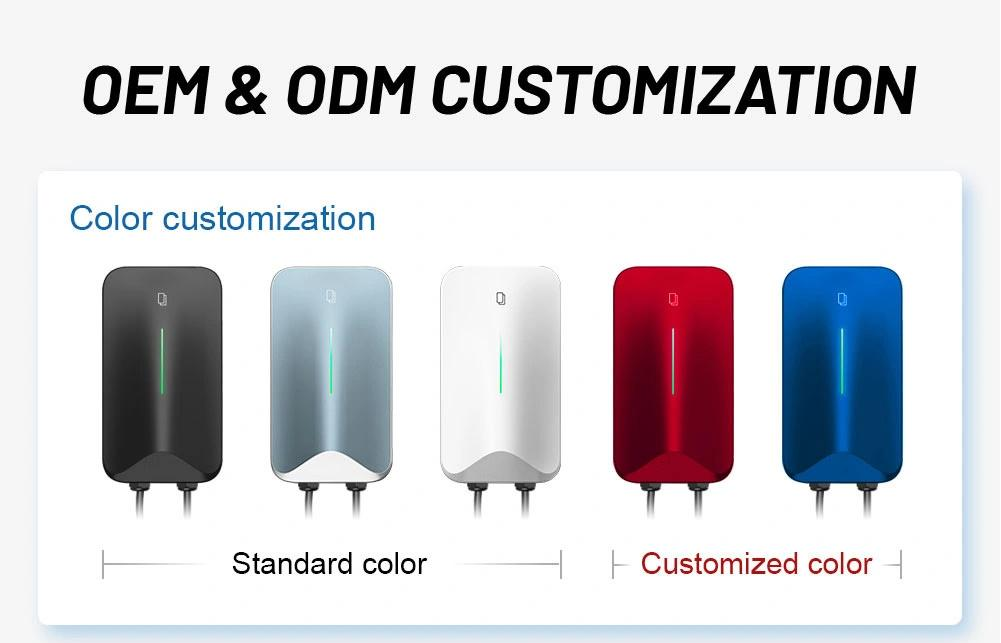
INFORE ENVIRO positions itself as an EV charging manufacturer serving B2B customers and offering both standard products and OEM/ODM development. Its wider portfolio covers AC and DC charging equipment, allowing business buyers to consider different power levels according to project requirements.
For public infrastructure, the smart charger is becoming part of a managed network rather than an isolated appliance. A 32A AC charger can still have a practical role where vehicles remain parked for meaningful periods, while connected features give operators additional tools for managing the installation.
As charging networks mature, that balance between electrical performance, connectivity, and deployment flexibility will likely stay at the centre of equipment selection.


