

Outdoor RFID hardware faces a slow failure mechanism that is easy to overlook: sunlight can age exposed materials long before an electronic fault becomes obvious. Ultraviolet radiation can contribute to discoloration, cracking, embrittlement, and loss of mechanical integrity in susceptible plastics.
IEC 60068-2-5 specifically addresses simulated solar radiation and weathering effects, recognizing that sunlight interacts with temperature and moisture during environmental exposure.
Ingress creates a different pathway. Rain, dust, and humidity can reach sensitive electronics if the enclosure or cable interfaces are inadequate. For these deployments, therefore, enclosure protection cannot be treated as a simple waterproof label. Long service life depends on how the housing, seals, connections, mounting, and environmental limits work together.
UV Exposure Starts with the Enclosure Material
Solar radiation does not damage every enclosure material at the same rate. UV-driven photodegradation can produce surface discoloration, chalking, cracking, and declining mechanical integrity. Stabilizers and suitable material formulations can reduce these effects, but actual durability depends on the material system and exposure conditions.
A housing may remain electrically functional while its exterior gradually loses strength or develops cracks. Once the enclosure deteriorates, its ability to protect the electronics from water and contaminants can also be compromised. RSTC‘s product documentation should therefore be read alongside the actual installation environment rather than treating an outdoor label as a complete durability specification.
What an IP67 Rating Actually Addresses
Ingress Protection is a separate question from UV resistance. IEC 60529 defines the IP Code classification for degrees of protection provided by electrical equipment enclosures. An IP rating describes enclosure protection against specified ingress conditions; it does not, by itself, certify long-term resistance to sunlight, chemical exposure, or every outdoor stress.
A higher ingress rating should not automatically be interpreted as proof of UV durability. Conversely, UV-resistant materials do not guarantee protection against water or dust. The two requirements must be evaluated independently.
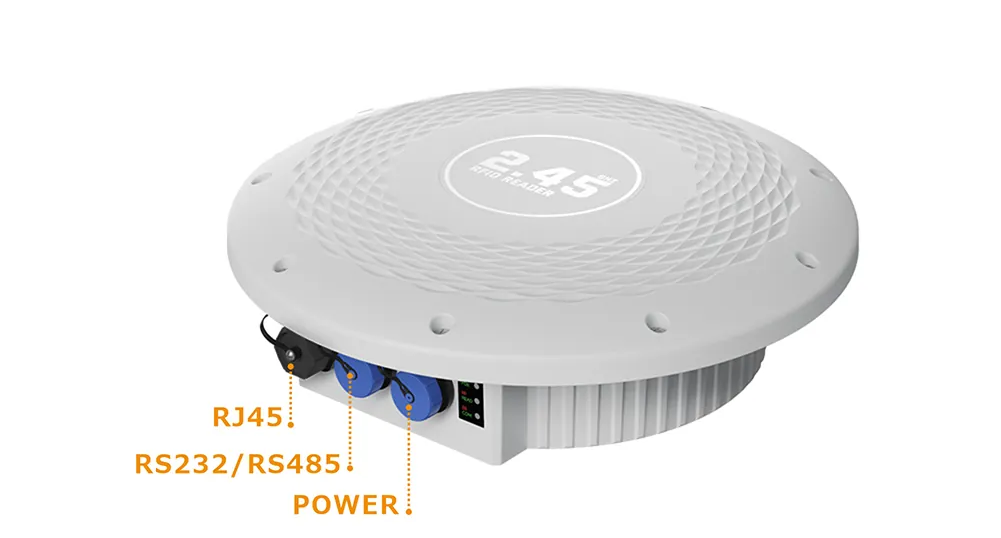
The RS-AI01 fixed RFID reader is specified by RSTC with an IP67-rated enclosure. Its published operating temperature range is −40°C to +60°C, while humidity is specified at 5% to 95% non-condensing. Site conditions still determine whether exposed connectors, cables, or mounting hardware need additional protection.
The Weakest Interface Can Defeat a Protected Housing
An enclosure is only one part of the outdoor installation. Cable glands, connectors, junction points, mounting penetrations, and power connections can create paths for moisture or contaminants if they are poorly selected or installed.
Drainage, cable routing, sealing practices, and mechanical support should therefore be considered during installation instead of added after commissioning. The same principle applies to maintenance. A damaged seal, loose connector, cracked housing, or deteriorated cable jacket can change the protection level of the complete installation even if the original device was appropriately specified.
Temperature Changes Add Another Stress Cycle
Outdoor electronics experience more than ambient heat. Solar radiation can raise surface temperatures, while rain, wind, nighttime cooling, and seasonal changes create repeated thermal transitions. IEC 60068-2-5 treats solar radiation testing in the context of thermal effects and weathering, reflecting the fact that outdoor exposure is not a single-variable problem.
For a fixed installation, the stated operating range should therefore be compared with actual site conditions rather than the local average temperature. Direct solar exposure, enclosure orientation, ventilation, and surrounding structures can all influence the temperature experienced by the equipment.
Build the Environmental Specification Around the Site
A practical selection process begins with exposure mapping. Engineers can identify direct sunlight, rain direction, dust, humidity, washdown, salt exposure, temperature extremes, vibration, and potential physical impact. The profile gives the equipment specification a real environmental context.
Next, separate the requirements into categories: ingress protection, solar/weathering resistance, temperature capability, mechanical durability, and connection protection. This prevents one specification from being mistaken for another.
For a fixed RFID reader, communication and power interfaces deserve particular attention because the reader may be protected while its external connections remain exposed. RSTC specifies RS-232 and 10/100M Ethernet for the RS-AI01, with optional interfaces available. Site-specific protection for those connection points should be assessed during installation.
Inspection Is Part of Long-Term Protection
Outdoor durability is not achieved at the moment of installation. Periodic inspection can identify surface cracking, fading, seal deterioration, loose hardware, cable damage, corrosion, or evidence of water ingress before they become functional failures.
Inspection frequency should reflect exposure severity. Equipment in continuous direct sunlight, coastal environments, dusty industrial areas, or locations subject to frequent washing may require closer attention than equipment installed in sheltered conditions.
Recording enclosure and connection condition creates a maintenance baseline and helps distinguish environmental degradation from electronic faults.
Choosing Hardware That Matches the Exposure
The most defensible specification for outdoor RFID begins with the environment, not a single marketing term. UV resistance addresses one degradation mechanism; an IP rating addresses defined ingress conditions; temperature specifications establish an operating envelope. None should be used as a substitute for the others.
The RS-AI01 provides a concrete example of this approach: its published IP67 enclosure and −40°C to +60°C operating range are documented environmental characteristics, while actual deployment still requires attention to mounting and exposed connections. RSTC also states that the reader is intended for fixed installation in outdoor and demanding environments.
Ultimately, reliable outdoor RFID hardware survives because the entire installation is matched to its exposure profile. Selecting an enclosure with an appropriate IP classification is necessary, but protecting the system over years also requires suitable materials, controlled interfaces, correct installation, and routine inspection. That broader view turns environmental protection from a specification checkbox into a maintainable engineering requirement.


