

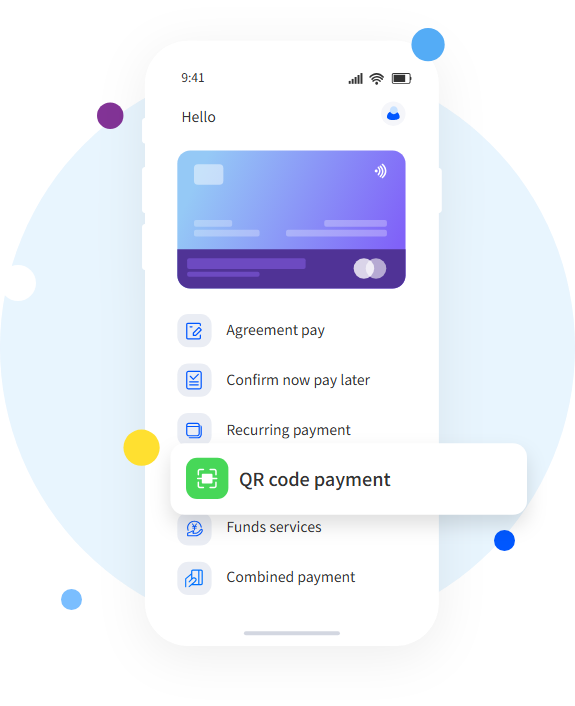
Mobile payments have moved far beyond simple online checkout. Retailers, transit operators, hospitality businesses, and other merchants increasingly need payment experiences that remain usable when connectivity is weak or temporarily unavailable. This makes offline capability an important area of innovation for fintech mobile payments. For payment providers and financial institutions, the challenge is balancing convenience with authorization, risk control, reconciliation, and reliable transaction processing.
Why Offline Wallet Capability Matters
Connectivity remains an operational variable in physical commerce. Customers may enter locations with weak mobile coverage, congested networks, or unreliable connections. A payment experience that depends entirely on continuous connectivity can create failed transactions, abandoned purchases, and additional pressure on frontline staff.
Offline capability can reduce this friction when it is designed with appropriate controls. Alipay+ documentation, for example, describes user-presented payment that can still work when the customer’s mobile phone has a weak network connection, while merchants receive a clear payment result for each transaction.
For fintech mobile payments providers, this means offline functionality should not be viewed merely as a convenience feature. It can become part of a broader strategy for improving payment acceptance and maintaining service continuity across different physical environments.
Designing a Reliable Offline Payment Architecture
A robust offline wallet model requires more than storing payment information locally. The platform needs to determine what transaction data can be processed without immediate access to the central payment environment and what must wait for network recovery.
Security is particularly important. Offline transactions can increase exposure if authentication, transaction limits, device controls, and fraud monitoring are poorly designed. Providers therefore need clearly defined authorization rules and mechanisms for synchronizing transaction records once connectivity returns.
A modern white label payment platform can help financial institutions and fintech companies build these capabilities into their own branded payment experiences. Instead of developing every wallet function independently, providers can use configurable infrastructure to support payment flows, risk controls, account services, and integrations while maintaining their customer-facing identity.
Balancing Convenience With Risk Management
The central difficulty in offline payments is the trade-off between availability and certainty. When a transaction cannot immediately reach the issuer or payment processor, the system may have less real-time information available for evaluating risk.
A practical architecture can address this through transaction thresholds, device-level security, controlled offline authorization, and post-transaction verification. Once connectivity is restored, transaction information can be synchronized and reconciled with the wider payment system.
This approach is especially relevant to fintech mobile payments because transaction volumes can span different merchants, devices, regions, and payment methods. Risk controls therefore need to operate consistently without making legitimate transactions unnecessarily difficult.
QR Payments and Offline Retail Scenarios
QR-based payments illustrate how offline payment capability can support physical commerce. Alipay+ supports several in-store payment models, including merchant-presented and user-presented modes. Its documentation identifies order-code payment as an offline payment type, while user-presented payment allows merchants to scan a customer’s payment code.
Such models demonstrate that offline payments can be incorporated into familiar customer journeys rather than requiring completely different checkout behavior. For merchants, standardized QR interactions can also reduce operational complexity when multiple digital wallets need to be accepted.
The broader opportunity for fintech mobile payments is to combine these familiar interfaces with stronger backend orchestration, allowing payment providers to support multiple wallets and transaction scenarios without fragmenting the merchant experience.
Why Platform Flexibility Matters
Offline functionality rarely exists in isolation. A payment provider may also need customer onboarding, wallet management, transaction monitoring, merchant acquiring, settlement, reporting, and cross-border capabilities.
A flexible white label payment platform can provide a foundation for bringing these functions together. Modular architecture allows providers to introduce capabilities according to their market priorities rather than rebuilding the entire payment stack for every new requirement.
This flexibility is increasingly valuable as payment ecosystems become more interconnected. Whale Cloud’s Alipay+ describes a unified wallet gateway that connects merchants with multiple mobile payment providers through a single integration, supporting both QR and NFC payment experiences across markets.
Turning Offline Capability Into Business Value
Offline payment technology ultimately needs to deliver measurable commercial benefits. Higher payment completion rates can help merchants reduce lost sales, while broader acceptance can improve the usefulness of a wallet. For payment providers, reliable offline functionality can also strengthen competitiveness in markets where connectivity varies considerably.
The strongest fintech mobile payments strategies therefore treat offline capability as part of the overall customer and merchant experience. It should work alongside online payments, risk management, reconciliation, loyalty, and analytics instead of becoming a disconnected technical feature.
Whale Cloud provides digital solutions designed to help businesses modernize financial and payment operations. Its technology-oriented approach can support organizations exploring scalable payment infrastructure and new digital financial services, including the development of more adaptable wallet and payment experiences.
Building the Next Layer of Wallet Innovation
Offline capability represents an important step toward making digital payments more resilient and inclusive. A well-designed white label payment platform can give fintech companies and financial institutions greater flexibility to develop branded wallet services while incorporating essential payment, security, and operational capabilities.
The next stage will likely involve deeper interoperability, smarter risk controls, and more seamless transitions between connected and offline environments. For providers seeking sustainable growth, investing in resilient fintech mobile payments infrastructure can help turn connectivity challenges into opportunities for better customer experiences and wider payment acceptance. Companies looking to strengthen wallet and payment capabilities can contact the Whale Cloud team to discuss suitable digital payment solutions and implementation needs.


