

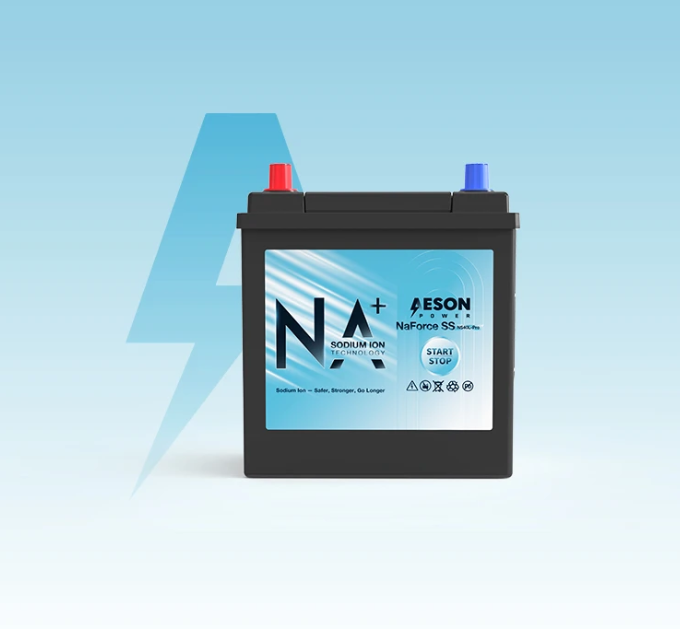
A car battery must deliver a short burst of current before the engine can run independently. Buyers often compare capacity or price first, but neither figure explains how reliably a battery will crank an engine during cold starts or after repeated short trips.
For distributors and vehicle manufacturers, useful sodium ion battery specifications begin with cold-cranking amps, voltage, case dimensions, charging compatibility, and service conditions. These figures help separate starting batteries from products designed mainly for steady energy delivery.
Why Cold-Cranking Amps Come First
Cold-cranking amps, or CCA, describe a battery’s ability to deliver current under a defined low-temperature test. Engine oil becomes thicker in cold weather, increasing the work required from the starter motor. A battery with insufficient cranking capability may turn the engine slowly even when its state of charge appears acceptable.
Buyers should compare the battery’s CCA with the vehicle maker’s minimum requirement. Diesel engines, larger engines, and vehicles used in winter climates may need different ratings. Testing standards also matter, since results obtained through different methods are not always directly comparable.
Rated energy, usually expressed in watt-hours, answers another question: how much energy the battery stores. It should not be confused with the ability to supply a high current for a few seconds. Both figures deserve attention, but CCA is central to starter performance.
Voltage and Physical Fit Must Match
Nominal voltage is an early compatibility check. Many passenger cars use a 12 V starting system, while certain commercial vehicles use other electrical arrangements. Buyers should verify system requirements rather than assuming that every battery marketed for automotive use can fit the same vehicle.
Case size matters just as much. Length, width, height, hold-down position, and terminal orientation determine whether the battery can be installed securely. A matching voltage rating will not solve interference with a battery tray or a cable that cannot reach its terminal.
When reviewing a sodium ion battery company, procurement teams should request fitment charts rather than relying on broad replacement claims. Case codes may look familiar across markets, yet hold-down details and terminal positions can differ. Installation checks are especially important when an existing fleet uses several vehicle generations.
For replacement programs, distributors can organize sodium ion battery specifications by vehicle application and standard case family. That makes it easier to identify suitable stock and reduce fitting errors at repair shops, fleet depots, and distribution centers.
What Temperature Ratings Actually Tell Buyers
A published operating temperature range provides useful context, but it does not replace a cold-start test. Buyers should ask how much cranking current remains available at the temperatures vehicles will actually experience. Battery condition, charge level, and vehicle load also affect results.
High-temperature tolerance deserves separate attention. Heat can accelerate aging, especially when a battery spends long periods in an engine compartment. Review the stated temperature limits alongside durability tests and installation requirements instead of assuming the full range gives identical performance.
Safety claims require similar care. Chemistry influences thermal behavior, but pack construction, protection controls, and correct charging still matter. Request applicable test reports and operating instructions before approving a new battery design for fleet or OEM use.
Charging Behavior and Start-Stop Duty
Starting does not end the battery’s work. After ignition, the vehicle’s charging system must restore energy within an acceptable period. Alternator voltage, charging limits, and battery management settings should be assessed before changing from lead-acid or Absorbent Glass Mat (AGM) technology to sodium-ion chemistry.
Frequent engine restarts introduce another consideration: cycle durability. Stop-start vehicles discharge and recharge repeatedly during city driving. Buyers should examine test conditions behind cycle-life figures, including depth of discharge, temperature, and charging rate, rather than comparing a single headline number.
A practical supplier review also considers warranty terms, maintenance instructions, and replacement frequency. A sodium ion battery company should be able to explain how its test data relates to taxi fleets, delivery vehicles, and other high-use applications without making unsupported lifetime promises.
A Product Example for Technical Comparison
A practical product reference can help buyers understand how sodium-ion technology is applied in automotive starting systems. Aeson Power lists the NS40L-Pro as a start-stop battery with a rated voltage of 12 V, a cold cranking current (CCA) of 520 A, and an energy capacity of 312 Wh. Its weight is 5.1 kg, and its dimensions (L/W/H) are 196 × 127 × 200 (220) mm.
The product specifications also list 180,000 start-stop cycles. This figure provides a reference when evaluating batteries for vehicles with frequent engine stops and restarts. Buyers should still check the exact vehicle platform, terminal arrangement, battery compartment clearance, and charging requirements before selecting a replacement model.
For purchasing teams comparing suppliers, a sodium ion battery company should provide model-specific technical documentation, consistent product labeling, and clear guidance on vehicle compatibility. Sample installation and controlled starting tests can help identify potential fitment or operating issues before a wider rollout.
A More Useful Buying Checklist
The priority is not the largest capacity or the highest advertised current in isolation. Match CCA, voltage, physical dimensions, terminal position, charging behavior, and temperature performance to the vehicle. Then examine repeated-start durability and the evidence behind safety and service-life claims.
The Australian supplier offers sodium-ion automotive starting products, including the NaForce range. Buyers evaluating sodium ion battery specifications can use its published model data as a starting point for engineering checks. Contact Aeson Power to discuss vehicle applications, order quantities, and supporting technical documentation.


