

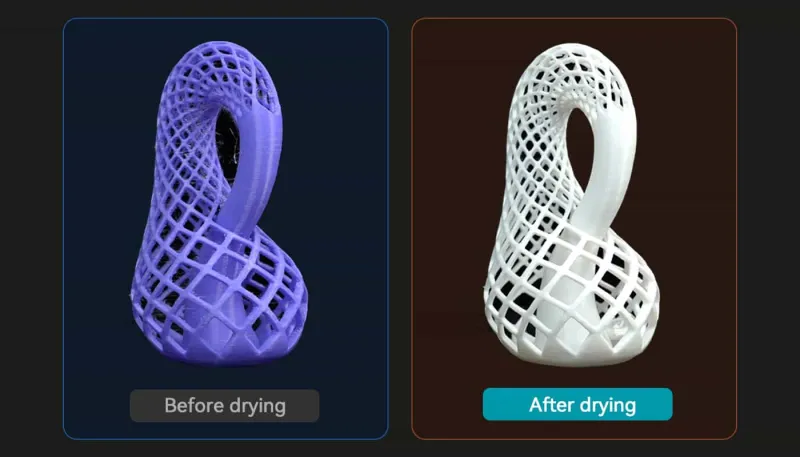
Moisture can affect filament performance, so keeping materials properly dried is an important part of a reliable 3D printing workflow. For businesses using PLA and other moisture-sensitive materials, a dedicated filament dryer can provide a controlled drying environment. The SUNLU Filament Dryer E2 is designed for this purpose, offering a 350W PTC heater, temperature uniformity within ±3°C, extra-large capacity, and dual drying-and-annealing functions.
Why Filament Drying Matters
Filament drying is especially relevant when working with materials that are sensitive to moisture. A dedicated filament dryer box provides a controlled environment for drying materials before they are used for printing. This approach can help businesses manage filament preparation as part of a more consistent production workflow.
The need for controlled drying is not limited to one material. The SUNLU Filament Dryer E2 is built for engineering-grade consumables while also supporting everyday materials. Its design addresses the need to keep moisture-sensitive materials such as PA and PC print-ready without sacrificing the performance expected from engineering filaments.
For teams managing multiple materials, having a dedicated drying solution can also simplify preparation. Instead of treating drying as an isolated task, a 3D printer filament dryer box can become part of the regular workflow before printing. This is particularly useful when different types of consumables are being handled during ongoing production.
Choosing a Filament Dryer for PLA
When selecting a filament dryer for PLA, temperature capability is an important specification to consider. The SUNLU Filament Dryer E2 offers a maximum temperature of 110°C, giving it a broad temperature range for different drying and material-management requirements.
The unit also combines drying and annealing functions. This dual-function design provides more than a basic drying setup and makes the E2 suitable for workflows that involve engineering-grade consumables as well as everyday materials.
Capacity is another consideration for professional users. The E2 features an extra-large capacity, making it suitable for handling larger filament requirements. For businesses that need to prepare filament efficiently, capacity can be an important part of organizing a practical production workflow.
Rapid Heating with a 350W PTC Heater
Heating performance directly affects how efficiently a filament dryer can prepare materials. The SUNLU Filament Dryer E2 uses a 350W PTC heater and can heat up to 70°C for fast drying.
This heating capability supports drying for specialty filaments such as PA and PC, while also making the unit a reliable filament dryer for PLA. For professional printing operations, the ability to prepare different filament types using one drying solution can simplify equipment planning and daily material handling.
The 350W PTC heater also supports the E2’s role as part of a streamlined workflow. Rather than relying on an unspecified drying environment, users have a dedicated filament dryer box designed around controlled heating and circulation.
Maintaining Temperature Uniformity
Heating a filament chamber is only one part of the drying process. Temperature distribution throughout the chamber also matters when multiple areas of the chamber need consistent conditions.
The SUNLU Filament Dryer E2 uses dual side circulation fans together with a bottom heating fan. This configuration helps maintain chamber temperature within ±3°C. The result is a more even drying environment across the chamber.
Temperature uniformity becomes particularly relevant when the dryer is used for one material or several materials at once. The E2 is designed to provide even, reliable drying for every roll, giving professional users a practical solution for managing their filament preparation process.
Supporting Different Filament Workflows
A professional 3D printing environment may involve more than PLA. Different projects can require different consumables, and material preparation needs to remain manageable as the workflow becomes more demanding.
The E2 is built around this requirement. Its maximum temperature of 110°C, 350W PTC heater, and extra-large capacity make it suitable for engineering-grade consumables. It is specifically designed to keep moisture-sensitive materials such as PA and PC print-ready.
At the same time, its heating capability makes the E2 a filament dryer for PLA and everyday materials. This combination allows one dryer to support a broader material workflow rather than being limited to a single filament category.
Making Drying Part of the 3D Printing Workflow
For businesses, filament preparation should be considered alongside other 3D printer accessories used to support printing operations. A dedicated dryer can provide a defined place for material drying before filament enters the printing process.
The SUNLU Filament Dryer E2 combines several functions within one unit. Its rapid heating, temperature uniformity, extra-large capacity, and drying-and-annealing functions are designed to support a practical material preparation workflow.
This makes the E2 particularly relevant when a business needs to manage both everyday and engineering-grade consumables. The ability to use the same filament dryer box across these workflows can make material preparation more straightforward.
A Practical Approach to PLA Filament Drying
Drying PLA does not have to be treated as a separate or improvised task. A dedicated filament dryer for PLA provides a controlled environment, while a suitable heating system and consistent chamber temperature help organize the drying workflow. As a general starting point, PLA can typically be dried at around 45–50°C for 4–6 hours, with longer drying times considered when the filament has absorbed significant moisture. The exact setting should follow the filament manufacturer’s recommendations.
The SUNLU Filament Dryer E2 provides a 350W PTC heater, heating up to 70°C, temperature uniformity within ±3°C, and a maximum temperature of 110°C. It also provides extra-large capacity and combines drying with annealing functions. These capabilities allow users to select a controlled temperature appropriate for different filament preparation requirements rather than relying on uncontrolled external heating.
For businesses looking to make filament preparation more systematic, these specifications provide a practical foundation. As part of a broader set of 3D printer accessories, the E2 can support workflows involving PLA, PA, PC, and other everyday or engineering-grade consumables.
A More Organized Filament Preparation Strategy
A reliable filament preparation process starts with choosing equipment that matches the materials and workflow requirements. For PLA users, a filament dryer for PLA can provide dedicated drying support, while broader temperature capability can help accommodate additional materials.
The SUNLU Filament Dryer E2 combines rapid heating, temperature uniformity, extra-large capacity, and dual drying-and-annealing functions. With its 350W PTC heater, heating capability up to 70°C, maximum temperature of 110°C, and ±3°C chamber temperature uniformity, it is designed to support both everyday and engineering-grade filament preparation.
For professional 3D printing teams, integrating a dedicated filament dryer box into the material workflow offers a straightforward way to organize drying. The E2’s combination of capacity, heating, and circulation features makes it a practical option for businesses managing varied filament requirements.


