

Scrap beside a rolling station can have several origins. Some material was deliberately reserved for trimming, some remained too straight at the plate ends, and some belongs to a shell that missed its required form.
A sheet metal rolling machine influences these losses through the way it grips, bends and positions the plate. Reducing waste starts by separating those causes, because a control adjustment cannot recover material lost for an unrelated reason.
Where Material Loss Actually Occurs
A reusable offcut and a rejected shell do not represent the same loss. A usable offcut can return to inventory for another component. A shell rejected after forming also consumes the time and work already spent rolling it. Treating every leftover piece as scrap hides that difference.
A material record should show what went into the job and what came out of it. It can distinguish accepted shells, usable offcuts, discarded trim and rejected work. A batch needs a consistent counting point so material still being processed is not recorded as waste.
Plate issued to a job also includes allowances required by its joining and finishing route. An allowance that supports the specified seam is different from extra length added because end curvature is uncertain.
Repeatedly increasing a blank to compensate for an unstable process can create systematic trimming. The useful question is whether each allowance has a defined purpose in making the finished shell.
A material-use review of CNC machines for manufacturing needs a consistent output measure. Comparing plate consumption per attempted component can make a batch with many rejects appear deceptively economical. Consumption per acceptable shell includes the material tied up in failed attempts. Reusable remnants remain a separate category, so later reuse does not disappear into an undifferentiated scrap total.
The Plate Ends Need Bending Too
Plate ends can remain flatter than the interior because their contact and loading conditions differ as the workpiece passes through the rolls. End pre-bending brings those regions closer to the intended curvature. On a sheet metal rolling machine, the purpose is to control a local forming limitation before it becomes excess trimming or an unacceptable joint region.
Clamping and side-roll movement contribute different parts of that action. Holding the plate constrains unwanted movement, while the side-roll position changes how the material is bent near the end. Neither function alone establishes the finished circumference or seam condition. The required end shape still depends on the material, the chosen geometry and the capabilities of the particular rolling configuration.
Blank preparation remains important even when CNC machines for manufacturing provide repeatable positioning. Errors in blank length or edge preparation can carry through to the finished shell. Adjusting the rolls cannot compensate for a blank cut too short.
Excess stock may permit correction but also creates a removal operation. Reducing that stock safely means understanding the forming and joining requirements, rather than eliminating allowances without checking their purpose.
Why One Setting Does Not Fit Every Batch
Identical roll positions do not necessarily produce identical curvature in different plate batches. Material strength, thickness and the required form affect how the plate responds and how much it springs back after loading. A stored setup on a sheet metal rolling machine therefore belongs to a defined job. Reusing it without considering changed material conditions can increase correction passes or rejected work.
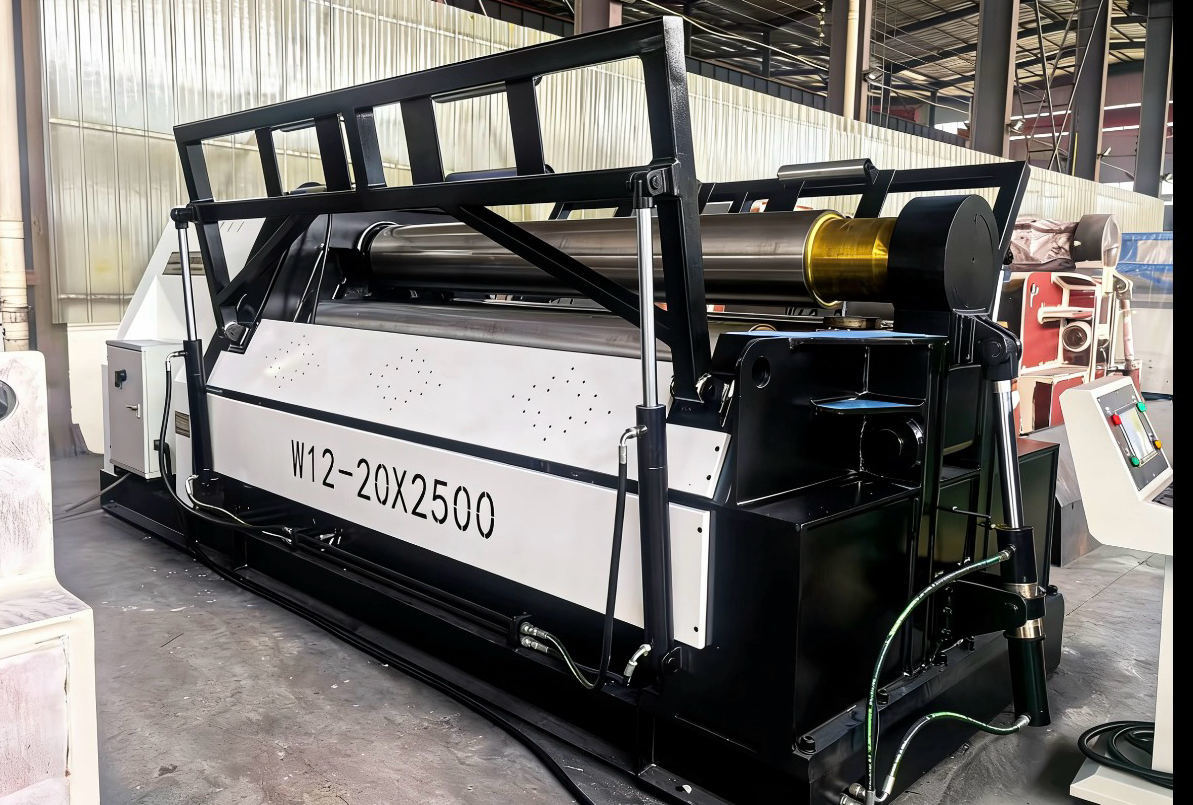
At a material yield condition of 245MPa and a plate width of 2500mm, Colgar lists the W12NC20×2500 at a maximum rolling thickness of 20mm and a maximum pre-bending thickness of 16mm. The two capacities describe different tasks. Treating the larger figure as the end-forming limit would overlook the region most likely to require additional correction or trimming.
Position feedback gives the controller information about the mechanism, not proof that the completed shell has the correct shape. PLC control and displacement feedback can support repeatable movement, while checks on the workpiece establish the result.
Targeted adjustment can then address the observed form instead of changing several settings without knowing which one affected the curvature. Measuring only the middle of a cylinder can miss end deviations that still demand trimming, correction or rejection.
Material Used Per Acceptable Shell
A trial can compare CNC machines for manufacturing by tracking the amount of plate issued per accepted shell. The comparison should use the same material grade, thickness, shell dimensions and acceptance criteria. Lower trim weight can mask higher consumption if the revised process produces more rejected shells.
End preparation is one reason to track that measure. On Colgar‘s W12NC12×2500 four-roll machine, the lower roll clamps the plate and the tilting side rolls pre-bend its ends. This can reduce the straight material left for trimming, depending on the plate and the required shape.
Each machine should start with a blank calculated for its own end allowance. Using identical blank lengths can conceal differences in trim requirements. Holding shell dimensions and inspection criteria constant lets the trial compare material use for the same finished part.
A three-roll model from Colgar’s range can be tested against the same job requirements. The trial should record end trim, rework and rejected shells separately, then compare plate consumption for the same quantity of acceptable parts. That breakdown shows whether any gain came from blank planning, end preparation or a change to the rolling process.


