

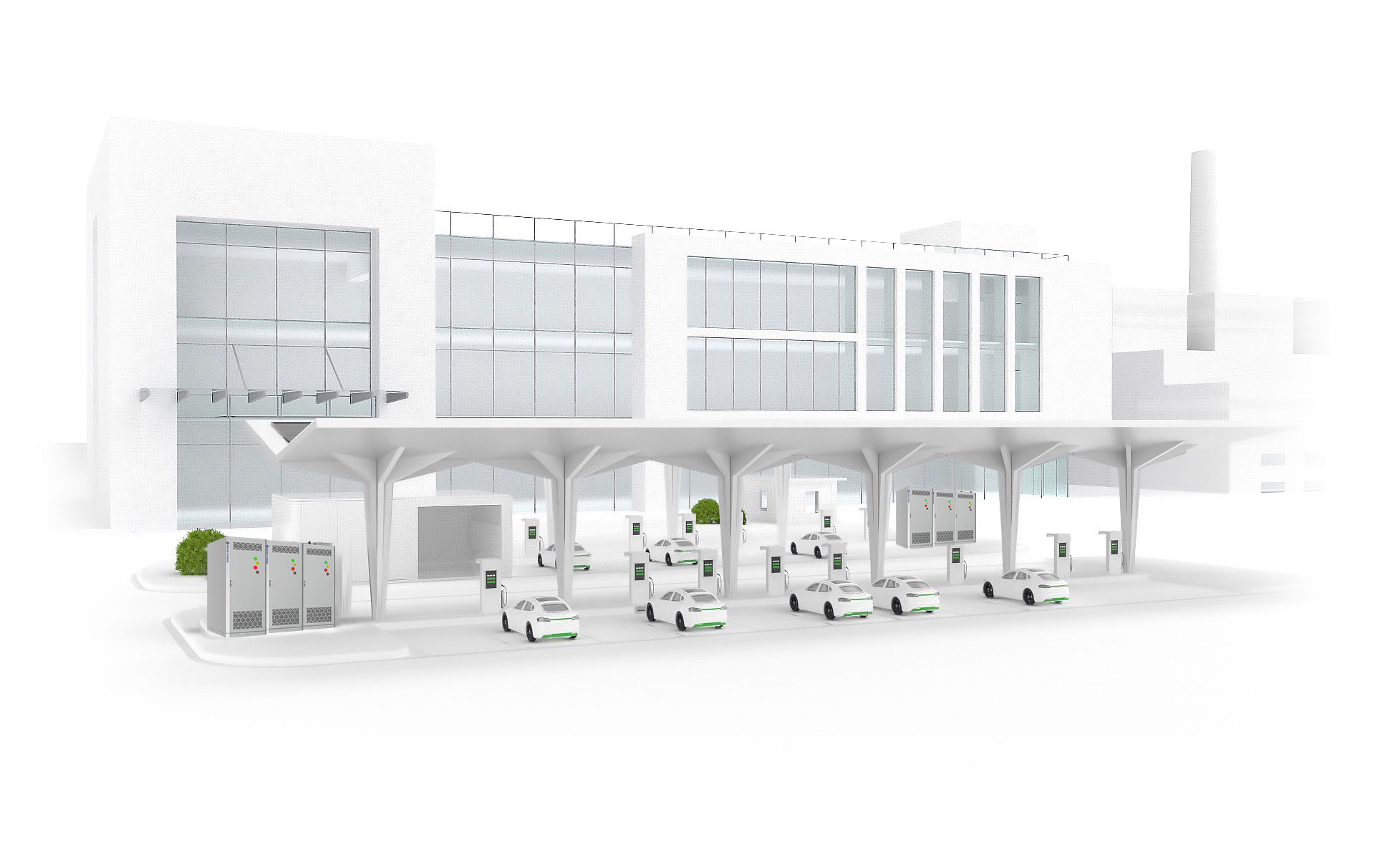
The fundamental architecture of a utility scale battery storage installation significantly influences its performance, efficiency, and integration pathway. The distinction between AC-coupled and DC-coupled designs represents a primary engineering decision for project developers. Each configuration for utility scale battery energy storage systems offers distinct technical characteristics suited to different project goals and existing infrastructure.
DC-Coupled System Architecture
In a DC-coupled design, the battery bank and a renewable source, like a solar PV array, connect on a common direct current bus before a single, centralized inverter. This configuration can offer higher round-trip efficiency for solar charging, as energy avoids a double conversion loss. It is often considered for new-build projects where solar and storage are designed concurrently. The design can streamline components but requires precise coordination between the maximum power point trackers of the solar system and the battery management system’s charge controllers.
AC-Coupled System Architecture
An AC-coupled system connects the battery storage to the alternating current side of the network, typically through its own dedicated bi-directional inverter. This offers greater flexibility for retrofitting storage to existing solar plants or for standalone utility scale battery storage projects that draw from and feed into the grid. It allows for independent operation and sizing of generation and storage assets. While slightly less efficient for direct solar charging due to multiple conversion stages, it provides robust grid-forming capabilities and can be easier to permit and expand.
Application-Based Selection Criteria
The selection between AC and DC coupling is not about superiority but application fit. Key criteria include the project’s primary use case, whether for solar firming, standalone grid services, or peaking capacity. Site-specific factors like existing electrical infrastructure, available space, and grid interconnection requirements also dictate the optimal approach. Engineering analysis must model energy losses, cost differentials in balance-of-system components, and long-term operational flexibility.
Determining the appropriate architecture for utility scale battery energy storage systems requires a detailed technical and economic feasibility study. The operational history of a provider informs this critical choice. With a background in over 400 global projects, HyperStrong possesses the applied experience to model both configurations. Their engineers at HyperStrong can assess which architecture aligns with specific performance and financial targets, ensuring the utility scale battery storage solution is optimized from design through deployment.


