

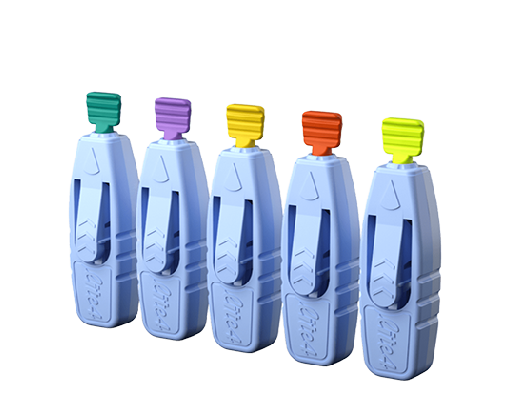
Point-of-care testing depends on more than the analyzer itself. The quality and timing of capillary blood collection can influence how efficiently a test moves from preparation to result interpretation, particularly in settings where decisions must be made without sending specimens to a central laboratory. Medical lancets form one part of this workflow, and their activation method, handling characteristics, and compatibility with the intended sampling procedure can affect how smoothly collection proceeds.
From outpatient screening to routine glucose monitoring, attention to seemingly small details can help make fingerstick procedures more predictable. SteriLance’s experience in capillary blood collection devices shows how design choices affect point-of-care use.
Why Collection Speed Matters at the Point of Care
Point-of-care testing is designed to bring diagnostic information closer to the patient. Unlike workflows that depend on specimen transport to a remote laboratory, these procedures can support assessment within the same clinical environment. That shorter pathway makes the collection stage particularly important because unnecessary delays before analysis can interrupt an otherwise streamlined process.
Fingerstick sampling is often selected when only a small capillary specimen is required. Blood glucose testing represents one familiar application, while other point-of-care procedures may also depend on capillary specimens. The objective is not simply to obtain blood quickly; collection needs to produce an appropriate specimen without introducing avoidable handling problems.
Device preparation can influence the rhythm of the procedure as well. Clear activation steps, stable positioning, and straightforward disposal reduce the number of actions required around the actual puncture. Such characteristics become increasingly relevant in environments where multiple tests are performed throughout the day.
Device Design and Workflow Efficiency
Activation mechanics deserve particular attention because the trigger determines how the puncture begins. Button-operated devices, pressure-activated systems, and adjustable-depth designs offer different interaction patterns. Selecting the appropriate format requires consideration of the intended user, sampling procedure, and operational environment rather than speed alone. SteriLance currently offers safety lancets across pressure-activated, side-button, push-button, and adjustable-depth categories.
One example is the Disposable Safety Lancet (Lite4 model), which uses side-button activation with gentle fingertip pressure. Its large anti-slip button provides a more defined contact area, while shorter activation travel can make the triggering motion more direct. The official instructions identify Lite4 as a device for capillary blood collection and list 26G, 28G, and 30G configurations.
Consistency also matters during repeated testing. If activation requires excessive manipulation or an unfamiliar sequence, users may need additional time to position and trigger the device. A clearly understood mechanism can instead make the collection step more predictable, allowing attention to remain on patient preparation, specimen handling, and subsequent testing.
How Sampling Technique Influences Point-of-Care Results
Collection speed should never be considered separately from sampling technique. Finger temperature, circulation, puncture location, and the amount of pressure applied during collection can all influence the ease of obtaining capillary blood. Poor technique may create delays even if the device itself is designed for rapid activation.
Hand preparation deserves practical consideration. Cold fingers can have reduced peripheral circulation, making blood collection more difficult. Gentle warming and appropriate cleansing may help establish more favorable conditions before puncture, while excessive squeezing should be avoided because it can complicate specimen collection.
The sequence after puncture is equally significant. A device should be used according to its instructions, and the collected specimen should move promptly into the intended testing process. Official SteriLance instructions for safety lancets specify activation against the puncture site and disposal of the used device into a suitable sharps container.
Turning Faster Collection Into Better Workflow
Faster fingerstick collection has practical value when it removes unnecessary pauses rather than simply encouraging rushed procedures. Clear device handling, suitable sampling conditions, and an established workflow can help shorten the interval between patient preparation and test analysis.
Clinical environments also benefit from predictable equipment behavior. Staff members may handle numerous samples during a shift, while patients performing self-testing may repeat the same procedure regularly. Familiar activation mechanisms can reduce hesitation and make the collection stage easier to integrate into routine practice.
Point-of-care efficiency therefore depends on several connected factors: device design, user technique, specimen requirements, and testing procedures. Medical lancets should be evaluated within that larger system instead of being judged solely by puncture speed or physical appearance.
Conclusion
Rapid capillary collection can contribute to a more responsive point-of-care workflow, but speed has meaning only when it accompanies appropriate sampling technique and reliable handling. Device ergonomics, activation travel, grip, and procedural clarity can each affect the time and steps involved in fingerstick collection. Such details become especially relevant in repeated testing environments, where small workflow differences accumulate over time. With experience spanning capillary blood collection devices and multiple safety-lancet formats, SteriLance illustrates how device engineering can support practical sampling needs without making the product itself the focus of the clinical discussion.
Disclaimer: This content is provided for general health education and informational purposes only. It does not constitute medical advice, diagnosis, or treatment. Individual health conditions vary, and no health education article can replace a face-to-face consultation with a qualified healthcare professional or licensed medical institution. If you have specific health concerns or feel unwell, please seek care from a licensed medical facility and do not delay treatment because of content on this platform.


