

Winter sports eyewear has to manage two different conditions at once. Cold air surrounds the outer lens, while warmth and moisture build up near the rider’s face. When that moisture reaches a sufficiently cool surface, condensation can cloud the view. For snowboard goggles, “dual-layer anti-fog” deserves closer inspection than a spec-sheet checkmark.
The phrase usually describes a lens assembly with two separated layers, combined with measures intended to limit fogging. It does not establish performance during extended or repeated use. Understanding the construction helps buyers assess samples.
What Two Lens Layers Actually Do
Dual-layer construction generally places an inner lens behind an outer lens, with a space between them. That space reduces direct heat transfer compared with a single sheet. The inner surface may stay warmer, making condensation less likely under suitable conditions.
Temperature differences still matter. Moist air can condense when the inner lens surface falls below its dew point. Wind, face coverage, exertion, and outdoor temperature can change that balance. Dual-layer construction reduces one source of fogging risk; it does not eliminate moisture.
Specification sheets should distinguish between a dual-layer lens assembly and an anti-fog treatment. These are related but separate details. Buyers should ask whether the inner lens has a coating, how the lens layers are joined, and whether the stated construction applies to every offered lens option.
Anti-Fog Claims Need Test Conditions
A statement such as “anti-fog lens” says little without test conditions. Purchasing teams should request the method used, exposure duration, temperature, humidity, and criteria for passing. Different methods may produce different results.
For clear snowboard goggles, visual clarity also involves distortion, light transmission, and surface condition. A lens may resist visible fog during a short test yet still show scratches or optical defects that interfere with use. Separate checks help establish which property has actually been assessed.
Sample reviews can include controlled transitions between warm indoor air and cold surroundings. Test staff should record when condensation appears, whether it clears, and what conditions were present. These observations support comparisons but cannot replace laboratory protocols.
Ventilation and Fit Change the Result
Lens construction is only part of the moisture system. Frame vents allow air exchange, while foam and facial fit affect how warm, humid air moves inside the goggle. Blocked vents or a poor fit can change performance even when the same lens is installed.
Helmets, face masks, and prescription glasses add practical variables. A mask that directs exhaled air upward may increase moisture near the inner lens. OTG designs must provide enough room for prescription frames without creating uncomfortable pressure or obstructing ventilation.
During sample fitting, buyers can check nose coverage, strap adjustment, and the gap between eyewear and face protection. Test with the accessories customers will use.
Lens Options Must Be Checked Separately
Anti-fog performance should not be confused with tint or lens technology. Polarized lenses manage certain reflections, photochromic lenses change tint with light exposure, and high-contrast designs aim to improve visual differentiation. None of these labels alone confirms how a lens handles condensation.
Light transmission also affects when a lens is suitable. Darker options can be useful under bright conditions, while other tints may suit lower light. Buyers should request measured transmission values for the chosen variants rather than assuming that a color name describes their optical behavior.
Replacement systems create another purchasing question. Magnetic attachment may make lens changes easier, but teams still need to examine retention, alignment, and fit after repeated changes. Confirm that the supplied replacement lens matches the approved construction and performance requirements.
How One Custom Model Fits the Checklist
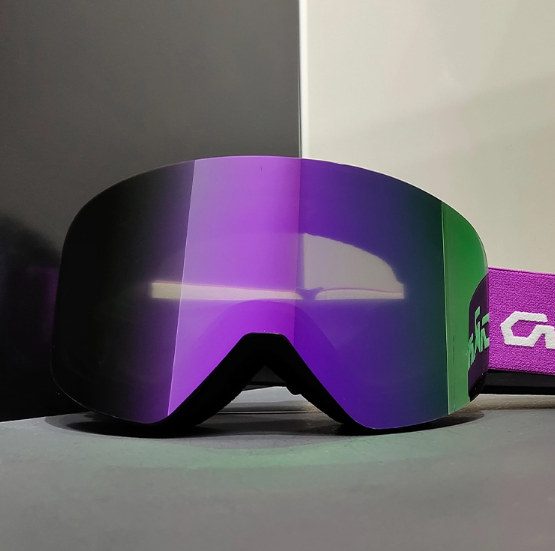
These questions become concrete when reviewing a product sample. YIJIA Optical offers the YH693, a frameless model with a cylindrical lens shape and interchangeable magnetic lens design. Its listed options include polycarbonate, polarized, photochromic, and high-contrast lenses, allowing buyers to discuss different viewing needs.
The model also lists anti-fog and UV400 features, a flexible TPU frame, foam configuration choices, and OTG compatibility. For OEM and ODM projects, they support frame customization. Buyers should confirm the selected lens and foam combinations on the actual sample rather than treating every listed feature as identical across configurations.
A technical review can therefore pair the spec sheet with physical checks: lens seating, visibility around the frame, strap grip, and fit over prescription glasses. These checks connect anti-fog claims to actual use.
Turn the Claim Into a Purchase Requirement
Before ordering snowboard goggles in volume, purchasing teams can build a comparison sheet with columns for lens construction, anti-fog test method, optical checks, ventilation, and accessory compatibility. Recording the exact sample configuration makes later production discussions more precise.
Suppliers should also clarify how they inspect finished goods. YIJIA Optical reports using optical transmission, impact, and anti-fog testing equipment, along with QC checks before shipment. Buyers can request the applicable inspection criteria and documentation for the ordered configuration.
Ultimately, clear snowboard goggles are not defined by one phrase on a product page. Dual-layer construction explains part of the design, while coatings, ventilation, fit, and verified test conditions determine what the claim means in practice. A specification is useful when the buyer can connect it to a sample, a test, and an agreed acceptance standard.


