

Manufacturers developing customized metal components often face high upfront costs before production begins. Casting molds, stamping dies, and dedicated machining fixtures require time and investment. When orders are small or designs change frequently, these costs can make conventional production less economical.
Metal additive manufacturing offers an alternative for suitable applications. By building parts layer by layer from digital models, manufacturers can reduce the need for dedicated forming tools. This approach is particularly relevant to prototyping, customized components, and low-volume production. The key is to identify where reduced tooling costs can offset the manufacturing cost per part.
How Additive Metal Manufacturing Reduces Tooling Requirements
Traditional metal manufacturing often relies on tools designed for specific part geometries. These tools can support efficient, repeatable production, especially at high volumes. However, developing or modifying them can increase costs when a component requires frequent design revisions.
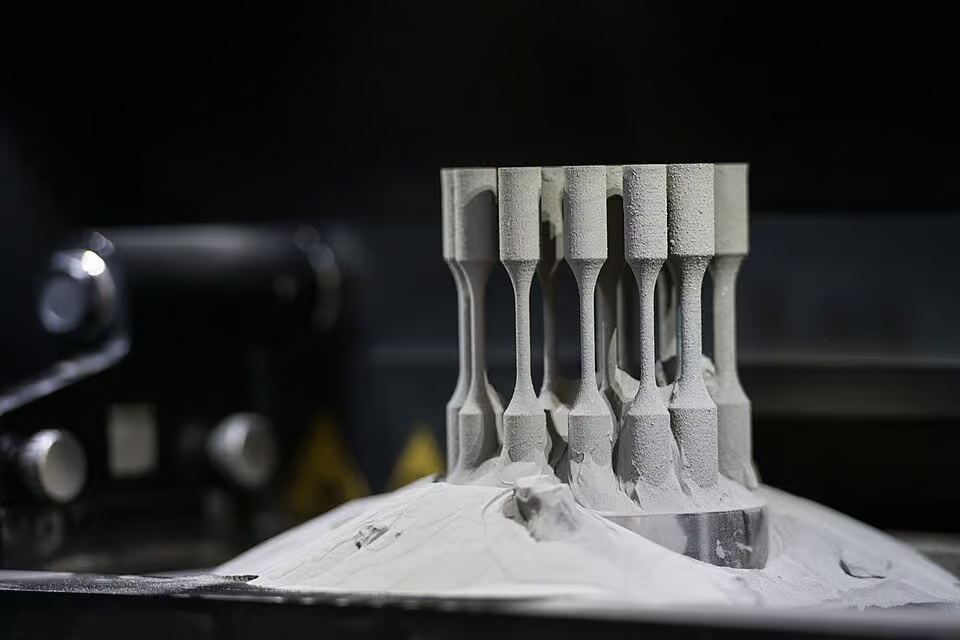
Additive metal manufacturing uses digital design files to guide production. In selective laser melting (SLM), a laser selectively melts metal powder in successive layers to create a three-dimensional component. Unlike processes that require dedicated forming molds, SLM can produce suitable geometries directly from prepared digital models.
When engineers revise a design, they can update the CAD file and prepare a new build rather than commission a replacement forming tool. Design review, build preparation, and process validation are still necessary, but some tooling expenses and modification delays may be avoided.
This makes SLM worth considering for prototypes, customized parts, and short production runs. It does not eliminate every tool or fixture. Its value depends on the component’s geometry, material, order quantity, and finishing requirements.
Where Reduced Tooling Creates Practical Value
Product development often involves several design iterations. Engineers may need to adjust mounting points, component shapes, or internal features after testing a prototype. With conventional manufacturing, these changes can require tooling modifications before another sample is ready.
Metal 3D printing allows suitable prototypes to be produced from updated digital files. Engineering teams can assess fit, assembly, and functional performance before committing to dedicated production tooling. This is useful for industrial equipment, automation systems, and specialized mechanical components.
The technology can also support customized replacement parts and small orders. For example, a manufacturer may need a bracket adapted to a particular machine, but the required quantity may not justify dedicated tooling. Additive manufacturing can produce suitable design variations without requiring a separate forming mold for each version.
Complex geometries offer another opportunity. Curved passages, integrated features, and structures that are difficult to machine may be achievable through additive manufacturing. Combining several features into one component may also reduce assembly steps. However, engineers must consider support removal, internal powder access, wall thickness, and finishing requirements during design.
Choosing a Laser 3D Printer for Custom Parts
Equipment selection should reflect the intended application. Buyers should evaluate component dimensions, geometry, material compatibility, expected production volume, and required surface finish. Powder handling, maintenance, operator training, and technical support also matter when assessing the full production workflow.
A laser 3D printer builds metal components using laser-based processing. For suitable small parts and development projects, it can provide a production route that reduces reliance on dedicated forming molds.
LiMN 3D specializes in SLM metal 3D printing equipment and customized processing services. Its business includes metal printers, prototype development, printing services, training, technical support, and metal powder materials for industrial and research applications.
The LM-M120D Lite is positioned for dental and small metal component applications. Its official product page lists a powder layer thickness of 20–60 μm and identifies cobalt-chromium alloys, stainless steel, and titanium alloys among its supported material categories. It also describes an integrated powder and filtration system and a touchscreen interface.
These specifications help buyers assess the system’s potential relevance, but they do not guarantee a particular component’s accuracy or cost. Before purchasing, manufacturers should confirm the machine configuration, specific alloy grade, process parameters, and part acceptance criteria with the supplier.
Comparing Tooling Savings With Production Costs
The main purchasing question is whether reduced tooling investment makes additive manufacturing more economical for the required order.
Compare both manufacturing routes at the same order quantity and final-part specification. Include initial tooling and revision costs for the conventional route, and build preparation, supports, finishing, and inspection for the additive route.
Order volume is a critical factor. Conventional manufacturing may achieve lower unit costs when demand is high and stable because tooling expenses are spread across many parts. Additive manufacturing may be more attractive for small batches, frequent revisions, or geometries that are difficult to produce using standard methods.
Lead time also needs careful evaluation. Avoiding dedicated tooling may remove one stage, but design preparation, machine availability, printing, finishing, and inspection still take time. Trial builds using representative part files can help manufacturers estimate realistic costs and schedules.
Some businesses may benefit from combining both methods. Additive manufacturing can support prototyping and early production, while conventional manufacturing may become more economical once demand increases and the design stabilizes.
Making an Informed Manufacturing Decision
Businesses evaluating additive metal manufacturing can compare representative designs and order quantities against their existing production routes. LiMN 3D provides metal additive manufacturing equipment and related technical services for industrial and research users. Companies can contact LiMN 3D to discuss their applications and assess whether an SLM-based workflow fits their requirements.
The goal is to reduce unnecessary tooling investment while maintaining the quality, consistency, and cost control required for production.


