

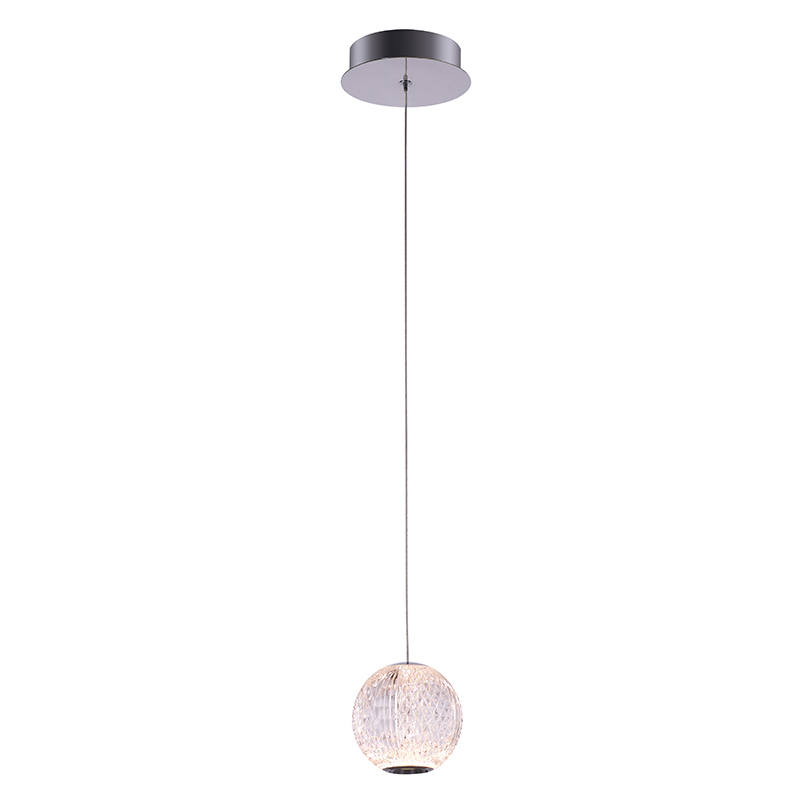
In the contemporary landscape of architectural design and facility management, energy efficiency has transitioned from a buzzword to a fundamental operational requirement. For architects, interior designers, and project managers, the selection of lighting fixtures is no longer solely about aesthetics; it is a calculation of performance, longevity, and environmental impact. Among the various fixtures available, the single LED pendant light has emerged as a powerhouse of efficiency. These compact units, often deployed in residential and commercial settings, represent the convergence of advanced semiconductor technology, material science, and precision engineering. Understanding the mechanics behind their efficiency helps professionals make informed decisions that benefit both the client’s budget and the planet.
The Physics of Luminous Efficacy
The core of a single LED pendant light’s efficiency lies in the fundamental difference between Light Emitting Diodes (LEDs) and traditional incandescent or halogen bulbs. Traditional sources generate light as a byproduct of heat—incandescence—which results in a massive waste of energy. In contrast, LEDs utilize electroluminescence, where photons are released as electrons recombine with electron holes within a semiconductor material. This process allows a modern single LED pendant light to achieve a significantly higher luminous efficacy, measured in lumens per watt (lm/W). While a traditional bulb might offer 15 lumens per watt, high-quality LED fixtures can exceed 100 lumens per watt. This means that a 21W LED pendant can produce the same, if not greater, brightness as a 100W incandescent fixture. For large-scale projects where hundreds of fixtures are specified, this reduction in wattage translates to substantial decreases in electrical load and utility costs over the building’s lifecycle.
Thermal Management and Driver Technology
However, the diode itself is only one part of the equation. The engineering housing the diode is equally critical. Heat is the enemy of LED efficiency; as the junction temperature rises, the light output degrades, and the lifespan shortens. A premium single LED pendant light is engineered with sophisticated thermal management systems. The metal components of the fixture—often crafted from aluminum or high-grade alloys—act as heat sinks, passively dissipating thermal energy away from the sensitive electronic components. Furthermore, the efficiency of the LED driver—the component that converts high-voltage AC power to low-voltage DC power—plays a pivotal role. In lower-quality fixtures, inefficient drivers dissipate energy as waste heat and suffer from low power factors. Top-tier manufacturers utilize high-performance drivers that ensure maximum power conversion efficiency (often above 90%). This ensures that the energy drawn from the grid is effectively used to produce light, minimizing “phantom” power loss and ensuring the fixture operates at peak performance for its rated 50,000+ hour lifespan.
Optical Efficiency and Material Science
A frequently overlooked aspect of energy efficiency is optical transmission. Generating light efficiently is useless if the diffuser material absorbs or traps a significant percentage of that light. This is where material science becomes a differentiator. Leading manufacturers employ high-grade optical acrylic (PMMA) or specially engineered glass to house the LED source. In a well-designed single LED pendant light, these materials are chosen for their high transmission rates and low absorption. For example, clear optical acrylic can have a light transmission rate higher than that of standard glass. By coupling a high-output LED engine with a high-transmission diffuser, the fixture maximizes the “delivered lumens”—the actual light that reaches the surface—rather than just the “source lumens.” This optical efficiency allows designers to specify lower-wattage fixtures without sacrificing the perceived brightness or visual comfort of the space, further enhancing the overall energy profile of the project.
Scaling Efficiency: From Single Units to Clusters
While the single LED pendant light is a standalone champion of efficiency, modern design often requires grander gestures. This is where the concept of cluster pendant lighting comes into play. By grouping multiple efficient single pendants together, designers can create massive, sculptural chandeliers that retain the energy-saving benefits of the individual units. Unlike traditional large-scale chandeliers that might rely on hundreds of inefficient bulbs, cluster pendant lighting utilizes the same advanced LED engines found in single pendants. This allows for the creation of dramatic focal points in hotel lobbies, stairwells, or dining halls that consume a fraction of the power of their predecessors. The modular nature of cluster pendant lighting also means that lighting levels can be precisely controlled. With dimmable drivers, the energy consumption can be further throttled down when full brightness is not required, adapting to the time of day and the mood of the environment.
The Diamond Series: Efficiency Meets Elegance
A prime example of this synergy between art and engineering is the Diamond Acrylic series. The single LED pendant light in this collection features a 21W integrated LED source. The fixture utilizes a crystal-clear optical acrylic sphere, texturized to refract light brilliantly. Because of the high quality of the acrylic, the light transmission is maximized, ensuring that the 21W source provides ample illumination for bedside or task applications without energy waste. The 3000K warm white output is delivered with a high Color Rendering Index (CRI), ensuring that while the fixture saves energy, it does not compromise on the visual quality of the environment. The metal finishes, available in Gold or Chrome, are durable and reflective, further aiding in light distribution. This fixture demonstrates that high efficiency does not require a sterile, industrial look; it can be achieved within a luxurious, decorative form factor.
Kinglong Lighting: A Benchmark in Manufacturing
Sourcing fixtures that genuinely deliver on these efficiency promises requires a partner with deep manufacturing expertise. Kinglong Lighting has established itself as a global leader in the decorative lighting sector. Founded in 1993 and operating from a 220,000m² self-owned factory in Zhongshan, China, the company integrates the entire production chain. This vertical integration allows them to rigorously test every component, from the LED chips to the drivers and optical materials. With over 32 years of experience and a portfolio boasting more than 2,500 patents, Kinglong Lighting is at the forefront of lighting innovation. Their products carry essential global certifications such as UL, ETL, and CE, providing professional clients with the assurance that the energy efficiency claims are backed by safety and performance standards. Whether supplying a single LED pendant light or a complex bespoke installation, their commitment to quality ensures reliable operation.
Customization: Tailoring Efficiency to the Project
The true power of working with a manufacturer like Kinglong Lighting lies in their ability to adapt standard efficient technologies to unique project needs. While a single LED pendant light is perfect for intimate spaces, a large commercial void might demand a more significant impact. Kinglong Lighting possesses strong customization capabilities that allow them to transform single units into elaborate cluster pendant lighting systems. Leveraging their proprietary “Mofun” online design platform and a dedicated R&D team, they can configure these clusters to any size or shape. If a client requires a 20-light cascade for a spiral staircase, Kinglong Lighting can design a custom canopy to house the drivers and suspend the efficient Diamond or Torch pendants at varying lengths. They can also adjust the wattage or color temperature of the LED engines to meet specific energy codes or design intent. This comprehensive OEM and ODM service ensures that the energy-efficient benefits of the single LED pendant light are scalable, providing a bespoke, sustainable lighting solution that aligns perfectly with the architectural vision.


